
Who is Zhong Kui?
1. The Divine Inquisitor: Origin of the Legend
Zhong Kui, the "Ghost Eater," is a legendary deity in Chinese folklore known as the vanquisher of evil spirits. A brilliant scholar denied his rank due to his appearance, he chose an honorable death and was appointed Supreme Judge of the Underworld.
When and How Did the Name "Zhong Kui" Enter Daily Life?
The Pioneering Research of Shen Kuo Shen Kuo (1031–1095), a polymath of the Northern Song Dynasty, was the first to conduct rigorous textual research on the origins of Zhong Kui. In the third volume of his Dream Pool Essays: Supplementary Essays (Mengxi Bitan: Bu Bitan), he recorded an inscription found on a painting of Zhong Kui by the celebrated Tang artist Wu Daozi (680–759), which was then part of the imperial collection.
Shen Kuo observed:
"Based on this inscription, the legend seems to have originated during the Kaiyuan era (713–741). However, during the Huangyou period (1049–1054), a tomb was excavated in Shangyuan County, Jinling. A stone epitaph identified it as the grave of Lady Zheng, mother of Zong Que, a Song Dynasty 'General Who Conquers the West.' Lady Zheng was the daughter of Zheng Zhong, the Grand Minister of Agriculture during the Han Dynasty. Notably, Zong Que had a sister named Zhong Kui. Records also show figures named Li Zhongkui in the Later Wei Dynasty, and generals Qiao Zhongkui and Yang Zhongkui in the Sui Dynasty.
Thus, the name 'Zhong Kui' has existed since antiquity and did not originate in the Kaiyuan era. It was merely the artistic depiction of Zhong Kui that began to flourish during that time. The characters '钟馗' were also historically written as '钟葵'."
Shen Kuo pointed out that since "Zhong Kui" was already a common personal name during the Northern and Southern Dynasties and the Sui Dynasty, the figure could not have emerged as late as the Tang Dynasty. Instead, the Tang era marked the transition of the name into a popular subject for painting.
Evolutionary Theory: From Object to Deity Following Shen Kuo, scholars such as Yang Shen, Hu Yinglin, Gu Yanwu, and Zhao Yi further traced the term's etymology. Building upon earlier arguments and citing diverse classical texts, they developed a prevailing academic view:
Etymological Roots: The name "Zhong Kui" (钟馗) likely evolved from "Zhong Kui" (终葵) or "Chui" (椎).
Original Function: In ancient times, these referred to a type of ritual mallet or club used for exorcism and driving away evil spirits.
Personification: Through centuries of folk worship and literary embellishment, this inanimate ritual object was gradually personified and deified, eventually evolving into the iconic ghost-buster we recognize today.
🐎 The Classic Steed: Bai Ze
Tang to Song-Yuan Periods
Since the Tang Dynasty, Zhong Kui has primarily been known as a deity who captures ghosts and wards off evil. Early texts, such as the Dunhuang manuscript "New Year's Eve Zhong Kui Exorcism Text," depict Zhong Kui actively catching ghosts but make no mention of a mount. During the Song and Yuan periods, works like "Dream Pool Essays" and "The Eastern Capital: A Dream of Splendor" record the custom of hanging Zhong Kui's image at year-end but do not emphasize any specific mount.
Ming-Qing Novels
During the Ming and Qing dynasties, novels like "Zhong Kui Slays Demons" and "Tale of Subduing Ghosts" systematized the stories of Zhong Kui. Some versions mention him riding a "Bai Ze" (a mythical beast capable of understanding all things and warding off evil), though this was not a universally established tradition.
Folk Art Depictions
In Ming-Qing New Year paintings and portraits, Zhong Kui is often shown riding a horse or a tiger—particularly the "tiger-riding" motif, symbolizing the suppression of evil. However, these representations are largely artistic creations and are not strictly documented in historical texts.
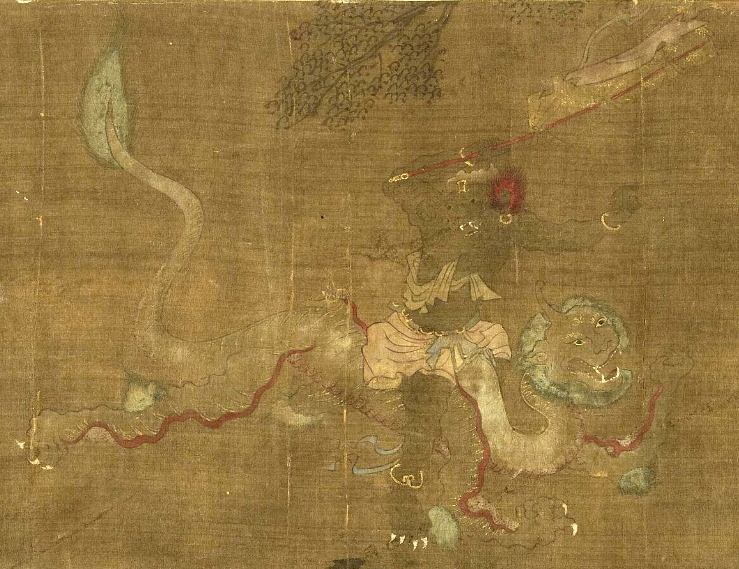
Ancient Scroll: Zhong Kui riding the mythical Bai Ze
🏮 Iconic Tale: The Bridal Levy
"Even in the Underworld, a vow must be kept." The story of Zhong Kui marrying off his sister is the most humanizing chapter of his legend. He leads a ghostly retinue back to the mortal world to ensure his sister's happiness, showcasing the complex blend of terror and tenderness.
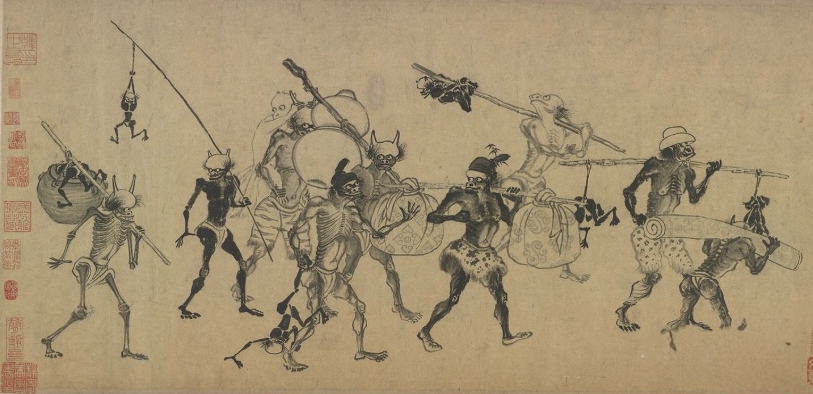
Part I: The procession begins, ghostly scouts leading the way
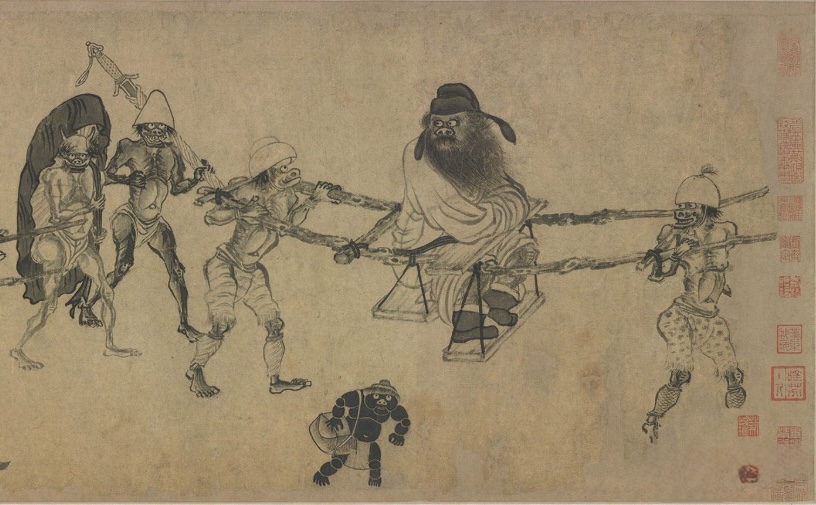
Part II: Spirits carrying the supernatural dowry
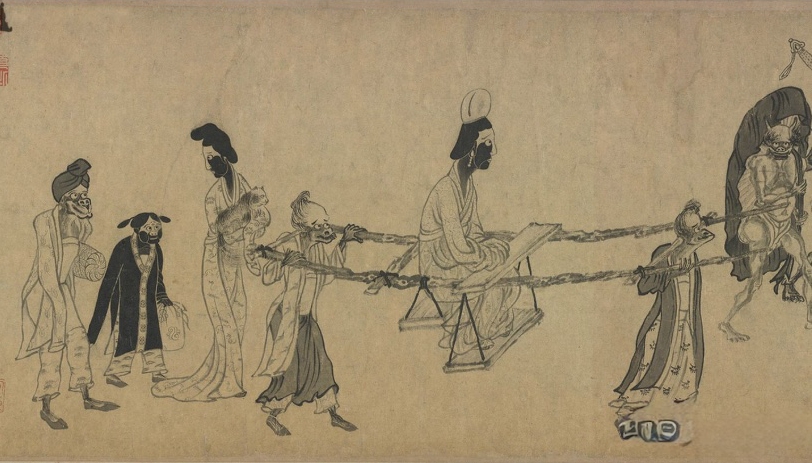
Part III: The Divine Judge presiding over the ceremony
2. Black Myth: Zhong Kui
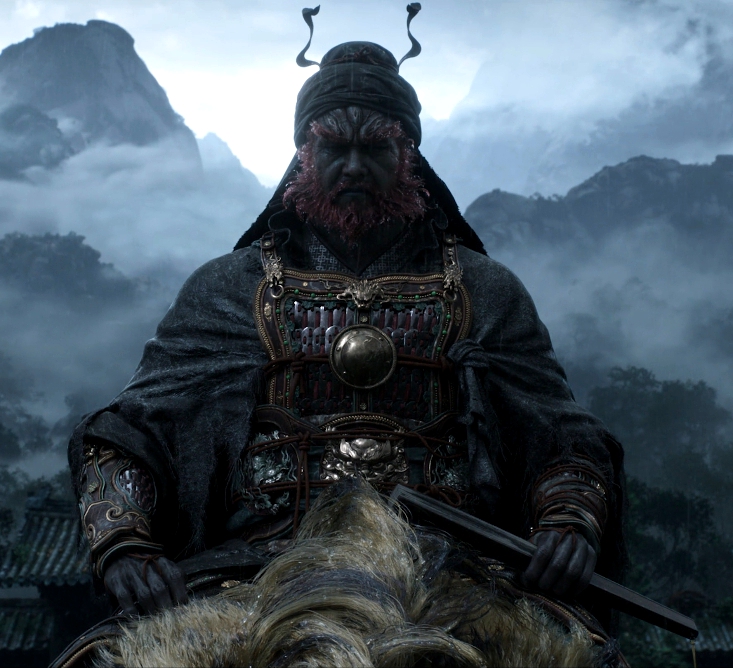
Official Teaser Analysis: Game Science's reimagining of the Netherworld general.
🗡️ Weapon: The Seven-Star Sword
Visuals suggest his primary weapon is the Seven-Star Sword, a Taoist relic capable of channeling celestial power.
🐅 Mount: The Armored Ghost-Tiger
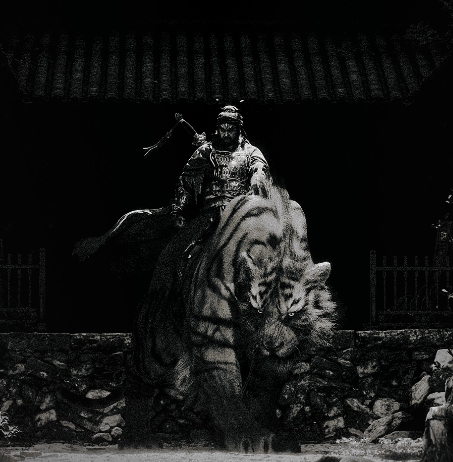
Replacing the traditional Bai Ze, Game Science introduces an aggressive, armored tiger as Zhong Kui's lethal companion.
🎨 Official Concept Art Analysis
Based on the newly released concept art, we can derive crucial details regarding the underworld's combat and narrative style:
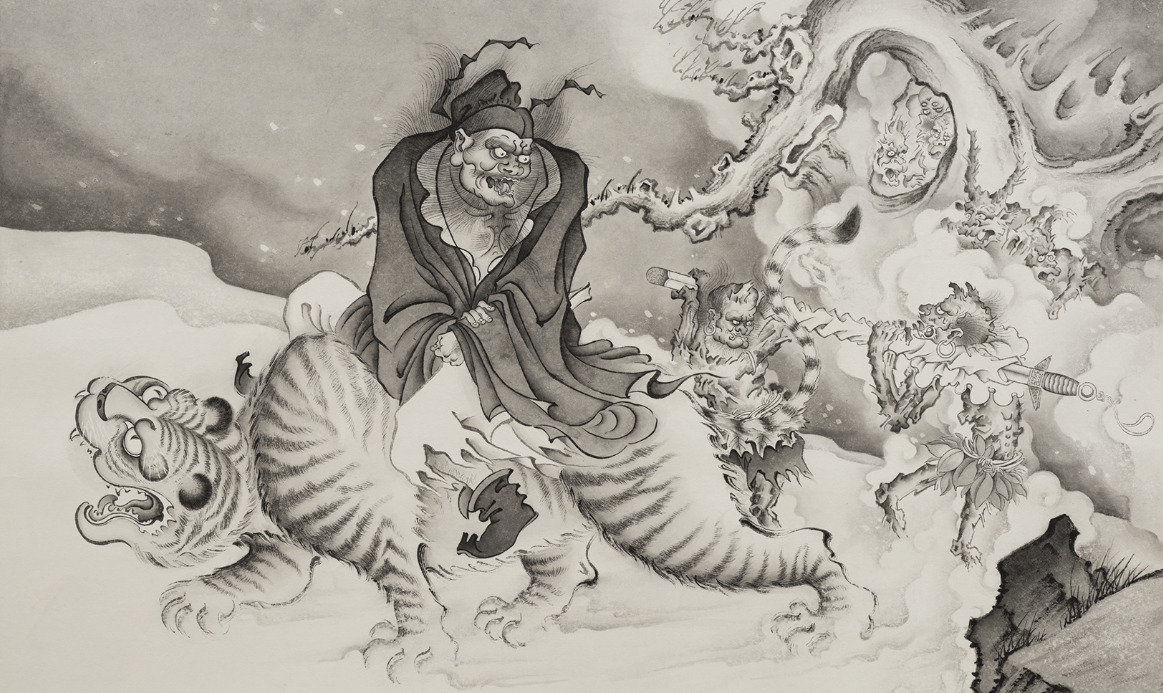
Official Art: Zhong Kui on his tiger, with minions carrying his massive sword.
- Divine Heavyweight: Minions Carrying the Sword: A key detail reveals that the two spirits behind Zhong Kui are working together to carry his massive Seven-Star Sword. This suggests the weapon possesses immense weight and divine power, requiring specialized attendants to transport it.
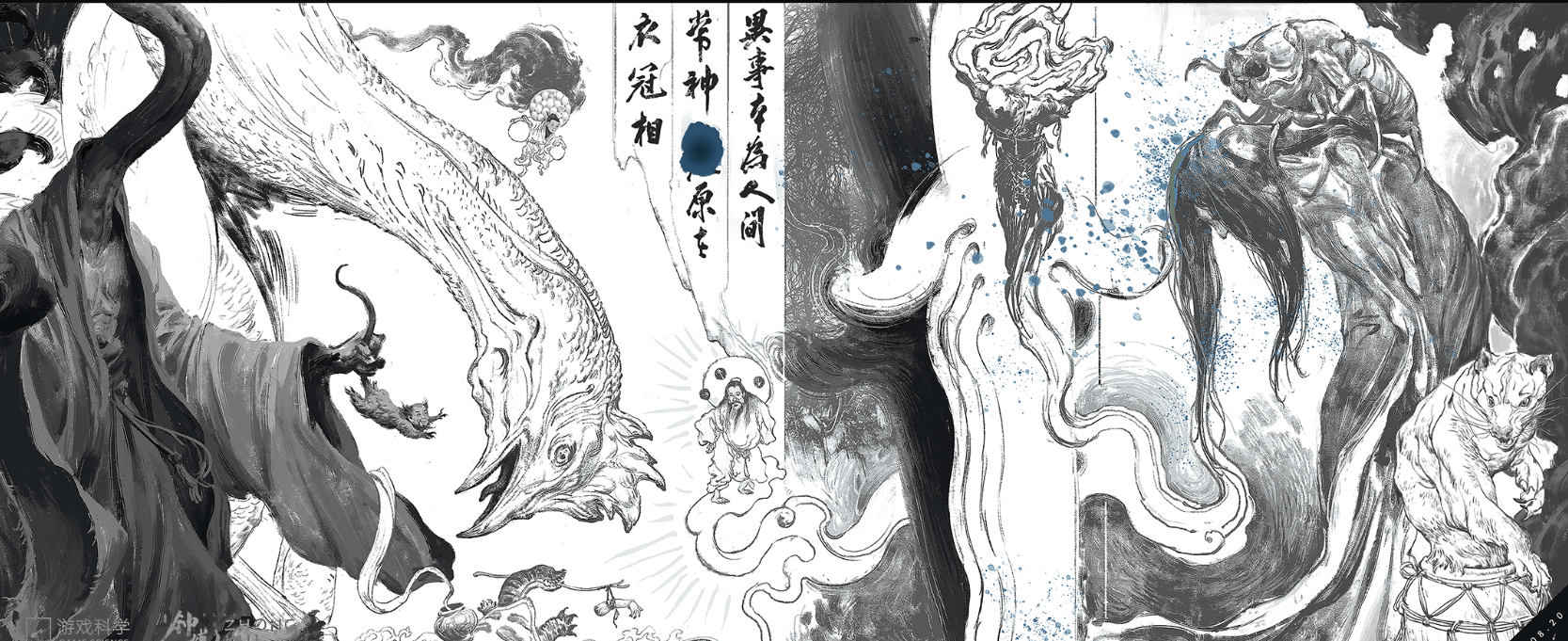
Art Scroll: Displaying the diverse and eerie inhabitants of the Underworld.
- "Strange Events in the Mortal Realm": The scroll features the text "異事在人間" (Strange events in the human world), suggesting a plot centered on the overlap between the living and the dead. The grotesque creatures represent the theme that "All Living Beings can be Demons."