
Who is Zhong Kui?
1. The Divine Inquisitor: Origin of the Legend
Zhong Kui, the "Ghost Eater," is a legendary deity in Chinese folklore known as the vanquisher of evil spirits. A brilliant scholar denied his rank due to his appearance, he chose an honorable death and was appointed Supreme Judge of the Underworld.
When and How Did the Name "Zhong Kui" Enter Daily Life?
The Pioneering Research of Shen Kuo Shen Kuo (1031–1095), a polymath of the Northern Song Dynasty, was the first to conduct rigorous textual research on the origins of Zhong Kui. In the third volume of his Dream Pool Essays: Supplementary Essays (Mengxi Bitan: Bu Bitan), he recorded an inscription found on a painting of Zhong Kui by the celebrated Tang artist Wu Daozi (680–759), which was then part of the imperial collection.
Shen Kuo observed:
"Based on this inscription, the legend seems to have originated during the Kaiyuan era (713–741). However, during the Huangyou period (1049–1054), a tomb was excavated in Shangyuan County, Jinling. A stone epitaph identified it as the grave of Lady Zheng, mother of Zong Que, a Song Dynasty 'General Who Conquers the West.' Lady Zheng was the daughter of Zheng Zhong, the Grand Minister of Agriculture during the Han Dynasty. Notably, Zong Que had a sister named Zhong Kui. Records also show figures named Li Zhongkui in the Later Wei Dynasty, and generals Qiao Zhongkui and Yang Zhongkui in the Sui Dynasty.
Thus, the name 'Zhong Kui' has existed since antiquity and did not originate in the Kaiyuan era. It was merely the artistic depiction of Zhong Kui that began to flourish during that time. The characters '钟馗' were also historically written as '钟葵'."
Shen Kuo pointed out that since "Zhong Kui" was already a common personal name during the Northern and Southern Dynasties and the Sui Dynasty, the figure could not have emerged as late as the Tang Dynasty. Instead, the Tang era marked the transition of the name into a popular subject for painting.
Evolutionary Theory: From Object to Deity Following Shen Kuo, scholars such as Yang Shen, Hu Yinglin, Gu Yanwu, and Zhao Yi further traced the term's etymology. Building upon earlier arguments and citing diverse classical texts, they developed a prevailing academic view:
Etymological Roots: The name "Zhong Kui" (钟馗) likely evolved from "Zhong Kui" (终葵) or "Chui" (椎).
Original Function: In ancient times, these referred to a type of ritual mallet or club used for exorcism and driving away evil spirits.
Personification: Through centuries of folk worship and literary embellishment, this inanimate ritual object was gradually personified and deified, eventually evolving into the iconic ghost-buster we recognize today.
🐎 The Classic Steed: Bai Ze
Tang to Song-Yuan Periods
Since the Tang Dynasty, Zhong Kui has primarily been known as a deity who captures ghosts and wards off evil. Early texts, such as the Dunhuang manuscript "New Year's Eve Zhong Kui Exorcism Text," depict Zhong Kui actively catching ghosts but make no mention of a mount. During the Song and Yuan periods, works like "Dream Pool Essays" and "The Eastern Capital: A Dream of Splendor" record the custom of hanging Zhong Kui's image at year-end but do not emphasize any specific mount.
Ming-Qing Novels
During the Ming and Qing dynasties, novels like "Zhong Kui Slays Demons" and "Tale of Subduing Ghosts" systematized the stories of Zhong Kui. Some versions mention him riding a "Bai Ze" (a mythical beast capable of understanding all things and warding off evil), though this was not a universally established tradition.
Folk Art Depictions
In Ming-Qing New Year paintings and portraits, Zhong Kui is often shown riding a horse or a tiger—particularly the "tiger-riding" motif, symbolizing the suppression of evil. However, these representations are largely artistic creations and are not strictly documented in historical texts.
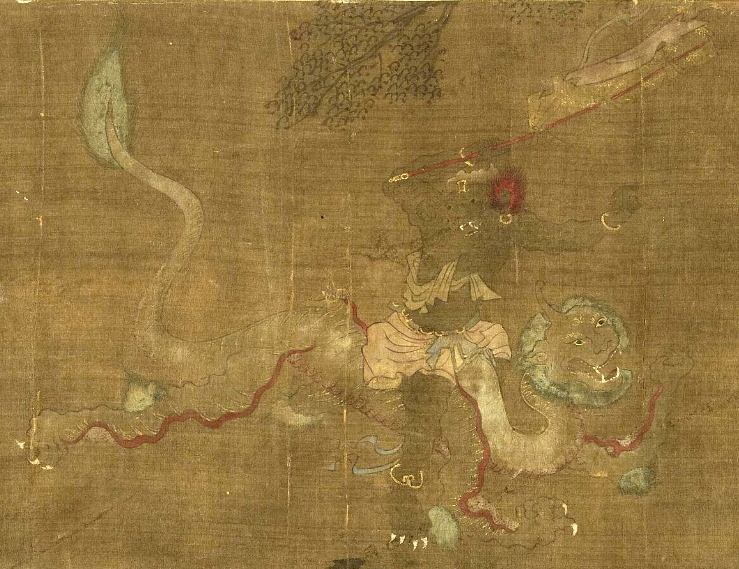
Ancient Scroll: Zhong Kui riding the mythical Bai Ze
🏮 Iconic Tale: The Bridal Levy
A Study of Narrative Paintings on the Zhong Kui Theme: Gong Kai's Zhong Kui’s Excursion to Zhongshan Among the extant narrative paintings of Zhong Kui, the earliest is Zhong Kui’s Excursion to Zhongshan by Gong Kai (1222–1305), currently held in the Freer Gallery of Art in the United States. The painting depicts Zhong Kui (the Lord of Zhongshan) and his sister (whom some scholars identify as his wife) leading a procession of ghost servants on an outing.
At the beginning of the scroll, Zhong Kui is depicted in Tang dynasty official robes, seated on a sedan chair carried by two small ghosts, turning his head to gaze back at a woman also traveling by sedan(Figure 2). At the end of the procession, various ghosts are shown carrying furniture and household items on their shoulders(Figure 1). This work had a profound influence on the composition and content of later Zhong Kui paintings. Its defining features—such as the linear, sequential progression of the procession, the detail of ghost servants hauling household goods, and the vivid moment of Zhong Kui looking back at his sister (or wife)—became essential archetypes for later works of the same genre.
🖼️ Composition and Layout Analysis
"Zhongshan Excursion" depicts a procession moving from left to right, comprising twenty-one figures of both humans and spirits. The composition is divided into three distinct sections:
- The Leading Section (Right): The Commander A man with a thick beard and large eyes (Zhong Kui) is shown wearing official robes and a "soft-foot" hat (futou), seated in a litter carried by ghost servants. Following him are two spirits: one carrying a long sword and another bearing a large, cushion-like object. Below him is a stout, jet-black "ink ghost," whose appearance is entirely different from the other attendants.
- The Middle Section: The Family and Exotic Maidens An elegantly dressed lady (Zhong Kui's sister or wife) sits in a litter carried by two ghost-maids, followed by three female attendants. The maid cradling a kitten shares similar facial features and hairstyle with the lady, wearing a floor-length robe. In contrast, the other four attendants display exotic styles, with protruding jaws and animal-like upturned noses suggesting their non-human nature.
- The Final Section (Left): Logistics and Trophies Nine ghost servants carry household belongings, including rolled carpets, giant wine jars, and bundles of various sizes. They have captured six smaller ghosts, which are either hung from long poles or held upside down. A phantom-like, multi-tailed strange creature follows at the very end.
🎨 Deep Analysis: Gong Kai's "Zhong Kui's Excursion"
Gong Kai (1221–1307) was a "loyalist survivor" (yimin) of the Southern Song Dynasty. In his hands, Zhong Kui is no longer just a ghost-slayer but a symbol of national grief and ethnic resilience.
I. The Mystery of the Lady in the Litter
A beautifully adorned lady sits in a "Zuodou" (litter) carried by small ghosts. There are three main theories regarding her identity:
| Identity Theory | Literary Basis | Visual Analysis |
|---|---|---|
| Sister Zhong | The popular folklore "Zhong Kui Marries off His Sister." | The presence of heavy luggage suggests a "relocation" or dowry procession. |
| Mother Li | Zhou Zhuojie's Zhong Kui: Fulfilling her wish to tour Zhongnan Mountain. | Ghost soldiers carry "rations" (edible ghosts on poles), showing the urgency of traveling before her time runs out. |
| Lady Zhong | Mentioned in rare documents. | Unlikely, as most traditions state Zhong Kui had no offspring. |
II. Colophon Interpretation: Four Layers of Meaning
Gong Kai’s self-inscribed poem (retaining original lines) reveals deep political metaphors:
1. An Aimless Beginning: Where to Go?
“髯君家本住中山,驾言出游安所适?谓为小猎无鹰犬,以为意行有家室。”
- Analysis: Gong Kai likened his own appearance to Zhong Kui. This line asks: without hounds for hunting, yet traveling with family, where are they heading? It reflects the isolation of a Song loyalist with nowhere to go after the Mongol conquest.
2. Satirical Adornment: Black Rouge
“阿妹韶容见靓妆,五色胭脂最宜黑。道逢驿舍须小憩,古屋何人供酒食。”
- Analysis: The "black rouge" symbolizes a corrupt and murky administration. The relationship between Zhong Kui and the lady metaphors Emperor Xuanzong and Consort Yang Guifei, hinting at the hidden decay of a prosperous era.
3. Venting Indignation: The Wine of中山 (Zhongshan)
“赤帻乌衫固可亨,美人清血终难得。不如归饮中山酿,一醉三年万缘息。”
- Analysis: Though Zhong Kui devours ghosts, he is powerless against "human demons" (corrupt officials). The despair of being unable to save the nation forces him to seek solace in a three-year-long drunken stupor.
4. Final Hope: Sweeping Away Evil
“却愁有物觑高明,八姨豪买他人宅。待得君醒为扫除,马嵬金驮去无迹。”
- Analysis: Alluding to the "Eighth Aunt" (Lady Qin) seizing mansions, it critiques the treacherous ministers who ruined the Song. The artist hopes Zhong Kui will eventually sweep away this evil air, more terrifying than any ghost.
III. Depth Analysis: Loyalism and Metaphor
- Logistic Details: The edible ghosts tied to bamboo poles emphasize a sense of urgency. It depicts a race against time—performing filial duties before life ends.
- Ghostly Allegory: Gong Kai grafted the imagery of "seeking refuge" onto ghosts. While the subjects are spectral, the pain is for the fall of the Southern Song, and the satire is aimed at ministers greedier than any ghost.
Refer to the details here: https://journals.publishing.umich.edu/ars/article/id/5200/.
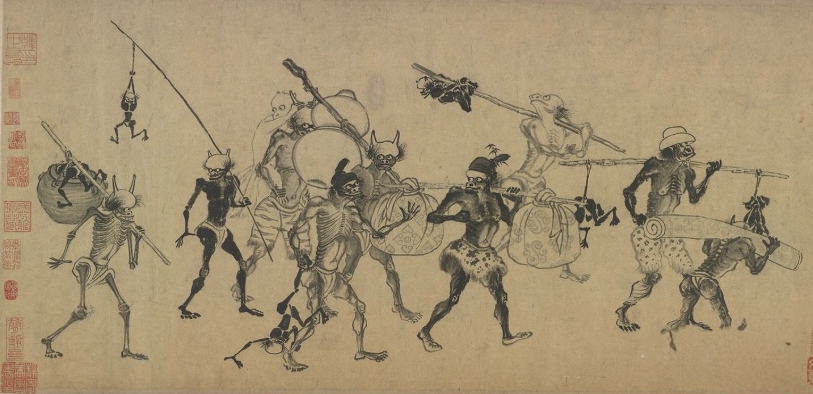
Figure 1: Detail of ghost servants carrying household items
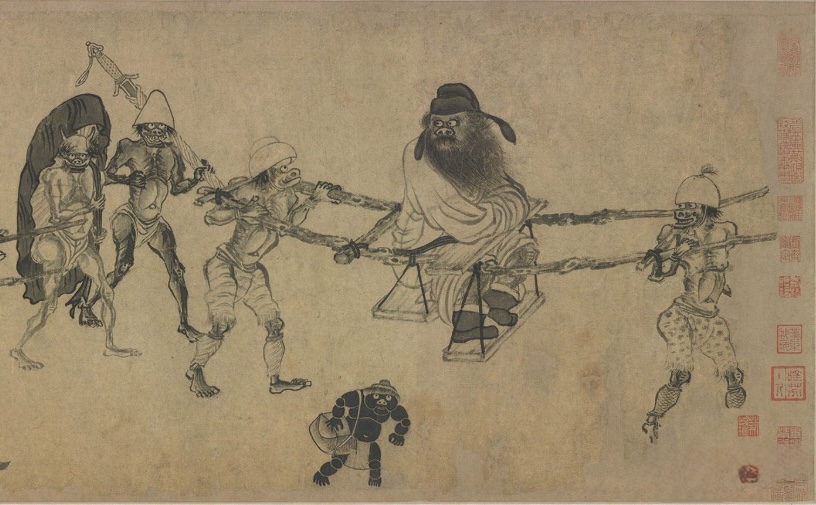
Figure 2: Zhong Kui turning to look at his sister (or wife) in the trailing sedan
🔍 Analysis: The Exotic Faces in Figure 3
Figure 3 reveals a fascinating multicultural narrative through the lady's entourage:
- Ethnic Diversity: While the maid holding a kitten follows Han tradition, the other four attendants exhibit distinct Central, Western, and Southern Asian features, collectively known as "Huihui" (Muslims) in medieval China.
- Turban Craftsmanship: The ghost-maids wear turbans with cloth strips crossing at a sharp peak on the forehead, a hallmark of Arab and Central Asian styles, contrasting sharply with Chinese headwear knotted at the back.
- Historical Realism: This imagery aligns with archaeological finds in Xi'an, reflecting Gong Kai's accurate depiction of foreign laborers active during the early Yuan Dynasty.
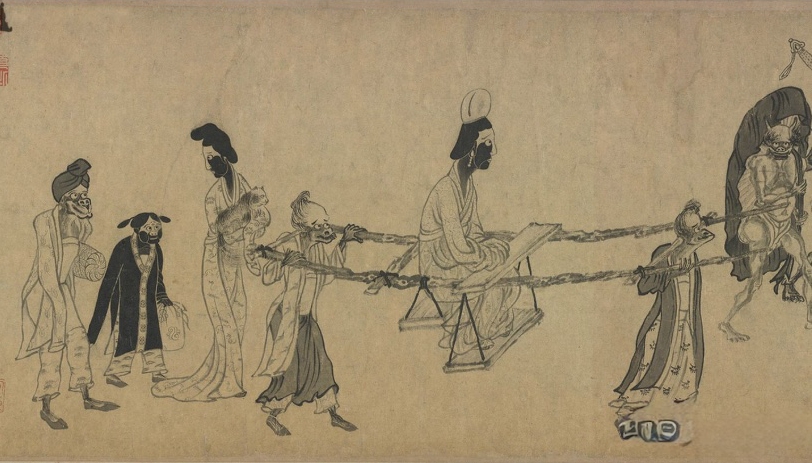
Figure 3: Zhong Kui's sister (or wife)
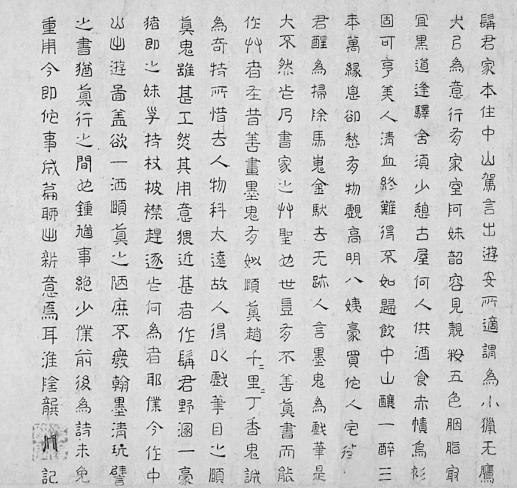
Figure 4: Gong Kai's Self-Written Inscription and Postscript
2. Black Myth: Zhong Kui
Game Science's New Title | Black Myth: Zhong Kui - Teaser Trailer.
Black Myth: Zhong Kui – 15 Minutes Gameplay Trailer.
📰 Latest Updates: No AIGC & August 20 Expectations
"Handcrafted, No AIGC": On August 10, 2026, Game Science co-founder and art director Yang Qi responded to fan questions about Black Myth: Zhong Kui. He stated that the team will deliberately avoid AI-generated content (AIGC) tools in the game's design and asset production, insisting on handcrafted creation.
August 20 — "A Simple Meal": Asked whether a major reveal is coming on August 20 (the second anniversary of Black Myth: Wukong), Yang Qi hinted that players should not expect big gameplay footage or a new trailer. Instead, he described it as a "gathering of old friends" and a "simple meal" — suggesting a lightweight CG piece, possibly in the style of the studio's previous New Year short films.
Note: The AIGC stance applies to the design and asset-creation phase of Zhong Kui. The "simple meal" remark is a hint to manage expectations, not a confirmed roadmap.
🗡️ Weapon: The Seven-Star Sword
Visuals suggest his primary weapon is the Seven-Star Sword, a Taoist relic capable of channeling celestial power.
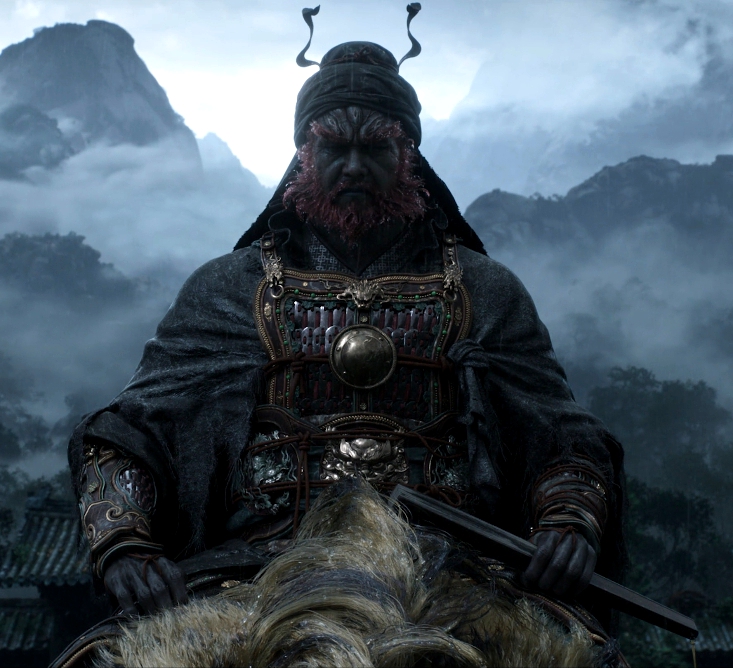
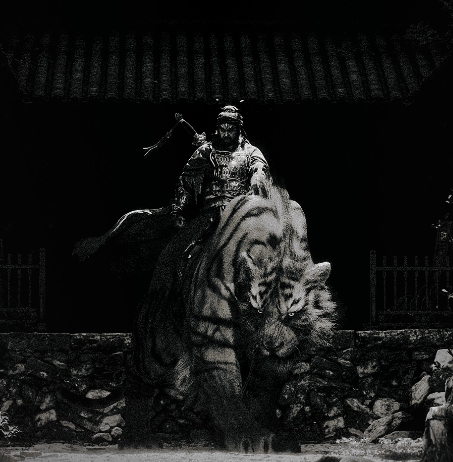
🐅 Mount: The Armored Ghost-Tiger
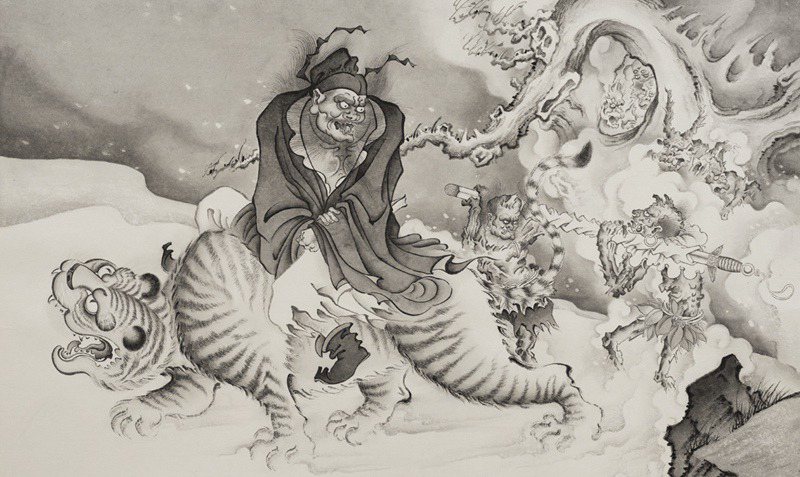
Replacing the traditional Bai Ze, Game Science introduces an aggressive, armored tiger as Zhong Kui's lethal companion.
🎨 Official Concept Art Analysis
Based on the newly released concept art, we can derive crucial details regarding the underworld's combat and narrative style:
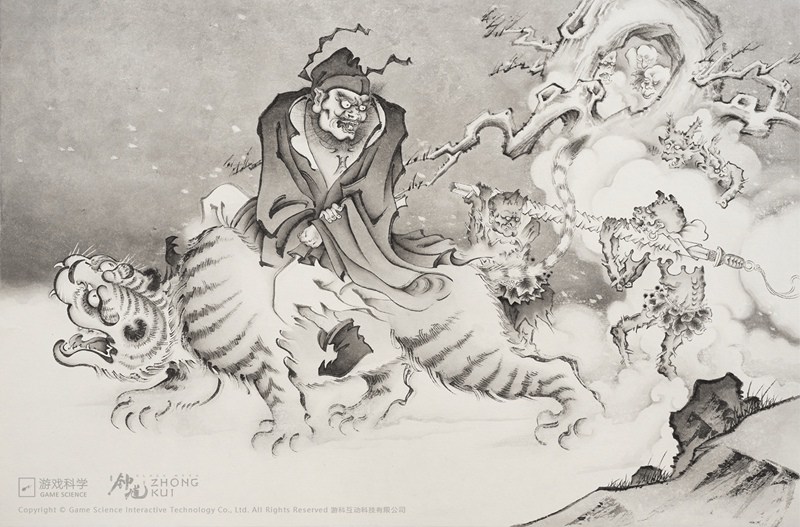
Official Art,Figure 1
Official Art,Figure 2
Based on the comparison between Figure 1 and Figure 2 from the official website, here are my conjectures:
- "The Two Realms of Yin and Yang"
| Dimension | Figure 1: The Living World (Yang) | Figure 2: The Underworld (Yin) |
|---|---|---|
| Color & Tone | Deep, steady ink tones; natural lighting transitions; a strong sense of physicality. | Leans toward grey-white; possesses a texture reminiscent of "paper money ash" or "twisting mist." |
| Line Art | Clear and heavy; emphasizes the character's sense of power and structural stability. | Rough and fragmented; lines appear scattered as if the image might dissipate at any moment. |
| Background | Subtle snowflakes or light motes; solid representation of rocks and vegetation. | Filled with dense noise—likely a curse or miasma—creating an oppressive atmosphere. |
- Mechanic Conjecture: Interaction similar to Lords of the Fallen
- The Dual Worlds of Yin and Yang】 Given the high-standard action design consistent with the Black Myth series, this visual disparity will likely translate into core gameplay.
- 【Parallel Dimensions】 Players might possess a specific treasure (like Zhong Kui’s sword or wine gourd) to switch between the "living" and "spirit" worlds instantly.
- 【The Living Realm】 Focuses on hardcore action combat against physically powerful enemies.
- 【The Underworld】 Encounter invisible spirits; paths may appear that don't exist in the living world (e.g., a broken stone bridge that is whole in the spirit realm).
- 【"Disenchantment" & "Revealing"】 Similar to Lords of the Fallen, players may need to shift into the Underworld to strike a boss's core or solve environmental puzzles.
- 【Yin Erosion】 Staying in the "Yin World" for too long might cause Zhong Kui’s appearance to become more hideous (matching Figure 2). This could result in continuous HP loss or more frenzied attack patterns (sacrificing defense for massive shadow damage) 😃 .
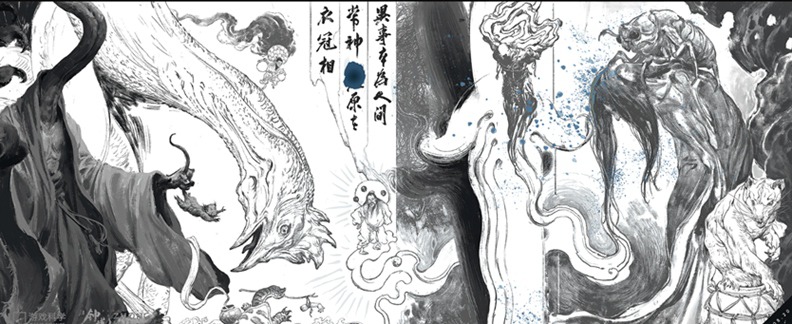
Official Art,Figure 3
异事本为人间常,神鬼原是衣冠相。 "Abnormalities are but the rhythm of the mundane; gods and demons alike are but human desires clad in robes."
- 【Absurd Folklore】 The giant rooster on the left deconstructs the traditional motif of "the dawn-bringer dispelling evil." Its exaggerated scale dissolves the sacred, replacing it with an eerie, looming presence.
- 【Netherworld Wayfarer】 At the lower left, a tortoise clutches a withered branch in its beak, from which a severed human arm dangles. This jarring juxtaposition of a slow-moving creature with a grisly remnant of mortality sketches a surreal and macabre world of folk anomalies.
- 【Parasitic Aesthetics】 The "Giant Cicada atop a Human" in the upper right is the visual crux of unease. Through the heterogenous fusion of insect and human form, it deconstructs the boundaries of life—a signature of the Black Myth artistic philosophy.
- 【Exorcism Vessels】 The white rat perched on the sealed urn in the lower right hints at Taoist seals and mediumship, concealing a hidden lethality within the silence.
Copyright Notice
The research content on this site is collected and curated by the China AAA Games team. You are welcome to cite or share this content, provided that you give appropriate credit and link back to the original source: china3agames.com.